Project Overview
Adolescent SRHR Information sessions
Donor: Girls First Fund
Period: 2019 to 2026
To combat child marriage in Kasese district GFF supports our SRH work through implementing a peer to peer education model where young people, both boys and girls receive weekly SRHR information and educate sessions on topics such as:
- Contraceptives use,
- Body changes and puberty,
- Gender,
- Life skills,
- Safety from violence,
- Relationships,
- Promoting and protecting health,
- Alcohol and drug abuse,
- Making reusable sanitary pads.
We reach out to youths and adolescents in Kasese District both in and out of school with the above messages.
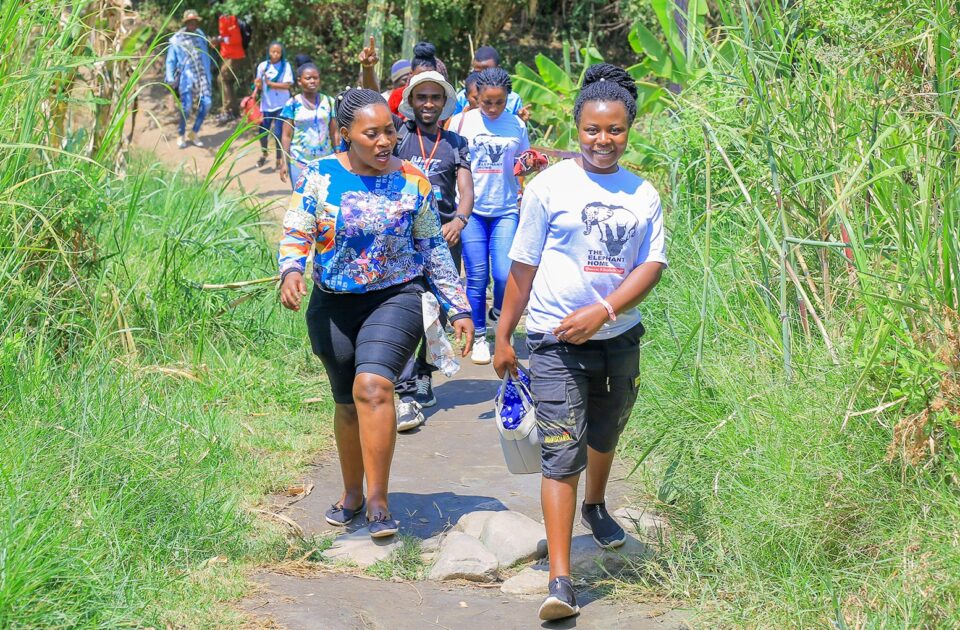
We have trained Adolescent mentors in Bwesumbu, Maliba, Buhuhira and Bugoye sub counties who do home to home visits, support counsel and refer SRH issues to relevant authorities.
Below is the trained Adolescent mentors of Bwesumbu sub county


In last 6 years, the trained Adolescent mentors have been able to reach out to 8409 young people, including 6304 girls and 2105 boys in the 4 target sub counties.
As a result, young people’s knowledge and life skills have increased and this has enabled them to make safe choices. Some case stories are recorded. We have been able to convince young mothers to go back to school as a result of the works of the adolescent mentors.
Two (2) Safe Drop in adolescent friendly Corners
The main objective for these Safe spaces is creating a supportive environment for adolescents SRHR and also providing spaces where they can learn, educate and stay safe.
Alliance for Children and Youth has 2 youth safe space Centers in Bwesumbu Sub County located at Bwesumbu Health Center III and in Buhuhira Sub County at Buhuhira Health Center III. Bwesumbu and Buhuhira are the farthest sub counties in Kasese district next to Mount Rwenzori National park, in our pursuit to bring services closer to person living in hard to reach areas. We create of safe spaces within the communities in partnerships with the community local leaders, more especially the women and youth local leaders.
The safe drop in adolescent friendly center is managed by reproductive health officers, who is based at the corner to offer friendly SRH services, conduct follow up visits, case management, counseling and referral.
This corner has provided spaces where young people learn, educate and help them stay safe during unprecedented times of COVID-19 where schools are closed.
During weekly and monthly meetings, the adolescent mentors provide a safe space and environment for youths and adolescents get information and interact.
While early unions remain prevalent in the communities where we work, access to quality sexual Reproductive Health services and information (AAAQ model), it has played a significant role in offering an alternative to the social norms and practices that fuel child marriages and have a stronger voice in the communities.
Menstrual Health Talks
We organize menstrual and health talks to sensitize young people in and out of school, and parents on menstrual care management.
We work with senior women and Male teachers in both primary and secondary schools to conduct Menstrual Health Days in schools at least once in a month. From 2022 to date we reached out to 22 schools (8 secondary and 14 primary schools).
We have trained 5310 girls and 77 boys to making reusable sanitary pads. Among them 12 were trained as trainers. These has also transferred the skill to train their fellow peers and parents.
The Menstrual Health talks are aimed at highlighting myths and miscomputations surrounding menstrual periods and pregnancy. We also talk about body changes and what they mean in the development of a boy and girl into a man and woman.
Advocacy through MDD, School Debates and Youth parliaments
As an organization, we believe in the ability of edutainment when it comes to young people.
A peer Music-Dance-Drama (MDD) trainer was recruited to help in developing talents among young girls, young women and boys.
The MDD Clubs have been formed at trained at both school and community levelto raise awareness on ending child marriages and early unions through poems, music, traditional and creative dance, education and news reporting, drama and skits.
We have learnt that advocacy through MDD increases confidence and the ability to raise sensitive SRHR issues affecting young people including access to and use of contraception, parents-adolescent communication (positive parenting) and abolition of harmful cultural practices including child marriages.
Topical school debates have been conducted to help increase the youths skills, knowledge and information on SRHR, Rights, Gender transformation, the importance of girl child education, access to equal opportunities between girls and boys, avoiding risky behaviors that leads to school drop outs, teenage pregnancies and eventually child marriage.
In 2022, we conducted a girl’s parliament, which was aimed at creating a platform to voice out their views and interface with their leaders and present issues affecting them and access to quality services in their communities. From this, commitments have been made by leaders to improve the quality of life and access to social services among the youths especially girls, which A4CY-U is still following up.